

From Bezos to XPRIZE, Nirvanic refines quantum cognition
Amid moon launches, Nirvanic's is fine tuning our vision for quantum minds in control of physical AI

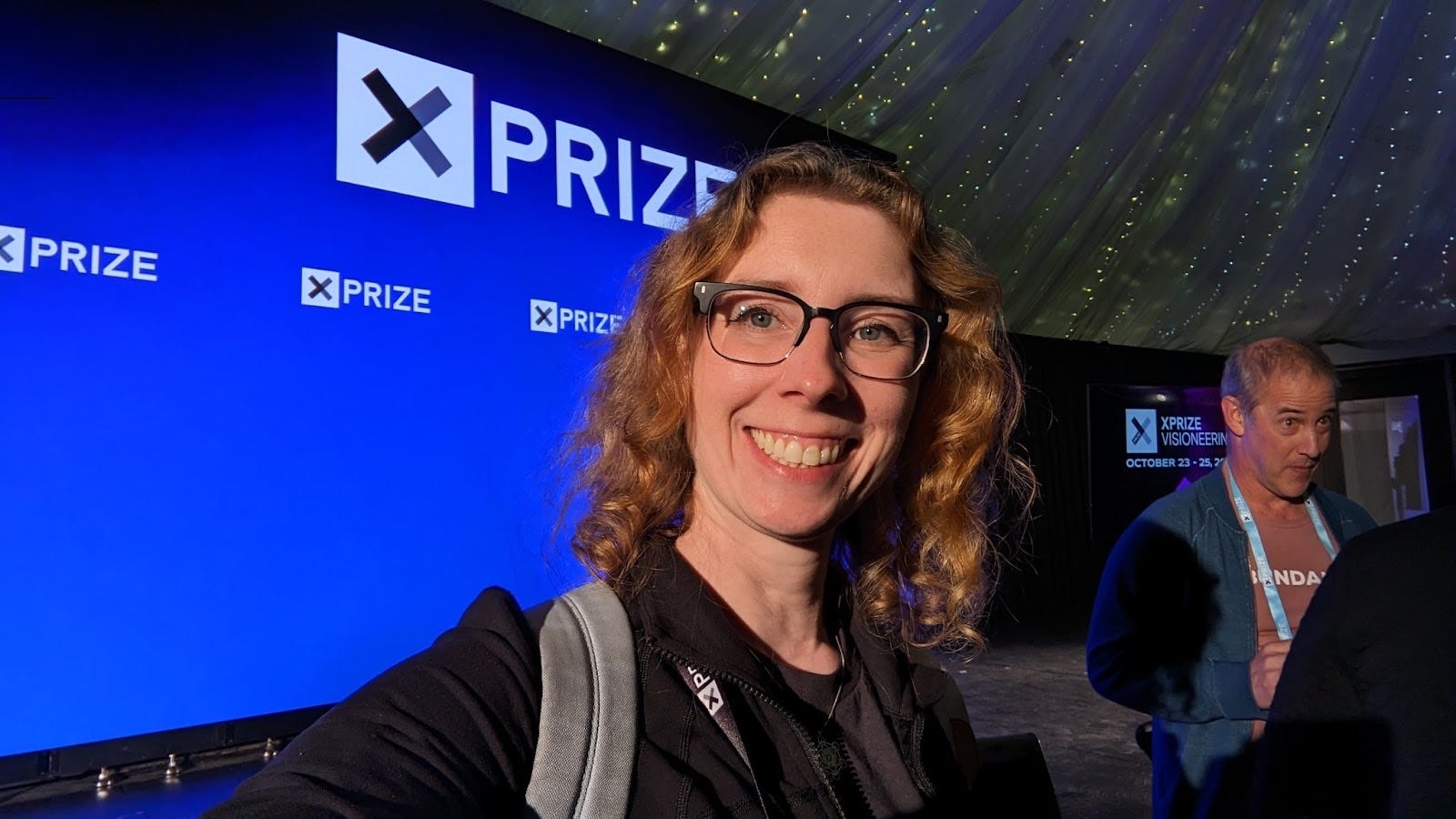
Suzanne Gildert at XPRIZE Visioneering conference in Malibu, CA.
It’s been exactly one year since Nirvanic presented at Jeff Bezos’ “MARS” tech summit in Florida. MARS is short for Machine Learning, AI, Robotics and Space. After watching a SpaceX rocket take off – and land! – we presented our vision of consciousness tech.
To celebrate, we prepared this film, Nirvanic goes to MARS. Check it out! Special thanks to the Amazon team who invited us.*
Since MARS, we’ve been quietly advancing our quantum mind thesis—moving from concept toward an initial roadmap for building and testing quantum-driven agents. Our focus is on systems that can integrate high-dimensional sensory input and act in real time under uncertainty—something current AI architectures struggle with in physical environments.
We brought a similar message to Malibu, California. My been-to-space friend, Anousheh Ansari, recently invited to me to speak at her XPRIZE Visioneering event, hosted by Peter Diamandis. This video below offers a short overview of Nirvanic’s evolving approach to quantum machine learning.
This Substack comes at an exciting time for space exploration. In two weeks, weather permitting, NASA’s Artemis II mission will rocket four astronauts around the Moon (including a Canadian 🇨🇦) for the first time since 1972. It carries meaning well beyond a technical milestone. It represents a shift in how humanity sees its future in space. Nirvanic believes autonomous robotics powered by quantum cognition will be critical to any space enterprise.
Around the time of the lunar launch, I’ll be back in the U.S. again, in Boston, to speak with a group of Ivy League founders about Nirvanic’s vision for engineering quantum minds that could make physical AI work more reliably in the real world.
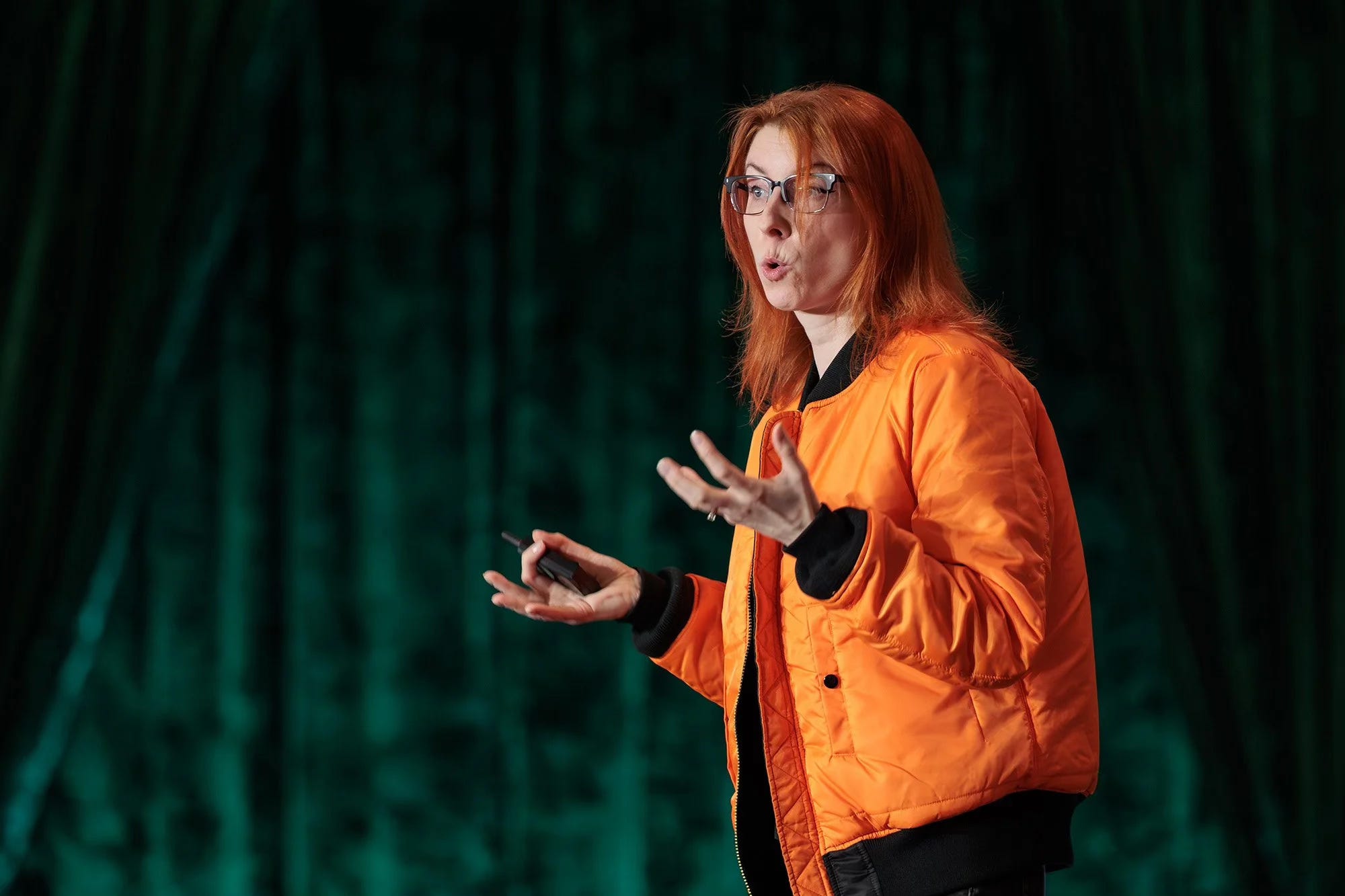
Dr. Suzanne Gildert keynoting at MARS tech summit hosted by Jeff Bezos. Photo by Ben Rose Photography.
Then it’s back to Vancouver, where we’re building out our core technology team and planning a new office and lab. It will take a few more months before anything formal is announced, but momentum is building. We believe our team will be inspired by our challenging mission to understand consciousness. Like SpaceX working toward interplanetary travel, or Blue Origin focusing on long-term space infrastructure, we’re taking a similarly staged approach. Our aim is ambitious, but the path is grounded.
It begins with our experimental plan to test our hypothesis that certain properties of cognition may be better modeled using quantum mechanical frameworks. This is not yet established science—but it is testable, and increasingly relevant as we push AI into physically embodied systems. Our ultimate goal is to build quantum minds capable of synthesizing the vast sensory and action signals from robots and other machines, in order to achieve vastly more useful physical AI. A world with real C-3POs, if you like.
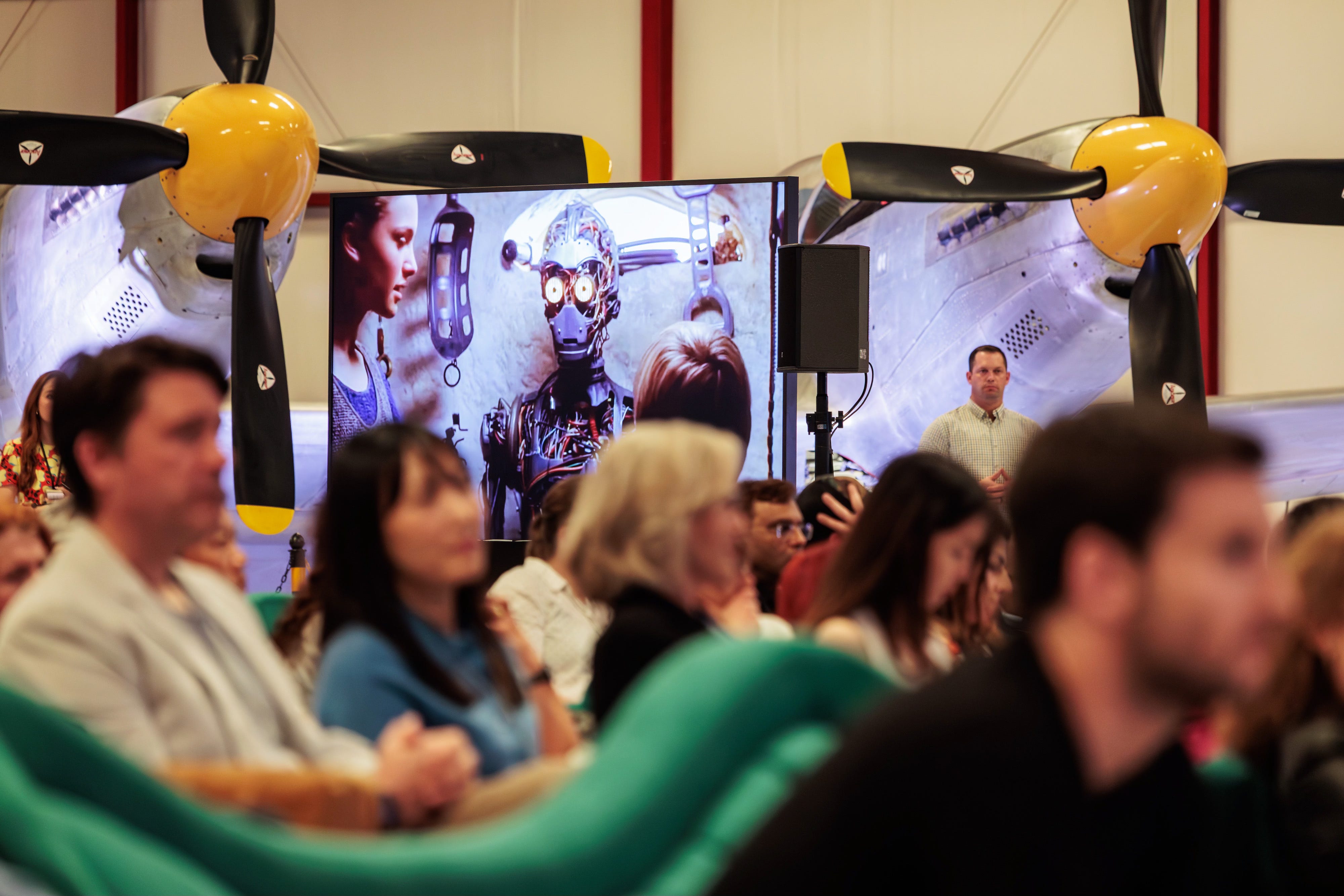
MARS tech summit 2025 in Orlando, FL. Photo by Ben Rose Photography.
The implications for enterprises are immense: machines that can process “in the moment” effectively in our complex world, ethically, safely, and with the capabilities of seemingly limitless cognition. Nirvanic will be evaluating high-performance quantum-driven agents for adaptive AI behavior. The goal is to imbue physical AI with “surprising competence” — the kind of intuition that allow them to deal with the unpredictable — like how people can cross busy streets with ease. Potential applications include domestic robots, drones that can wash buildings, and droids that can operate autonomously in space.
Beyond machines, there is a deeper question that continues to motivate this work.

If aspects of cognition are indeed quantum in nature, understanding those dynamics—such as wave function collapse—could reshape how we think about human minds as well. It raises the possibility of new forms of mind-to-mind connection or interaction that are difficult to model today. We approach these ideas cautiously. But they remain among the most profound long-term questions behind what we are building.
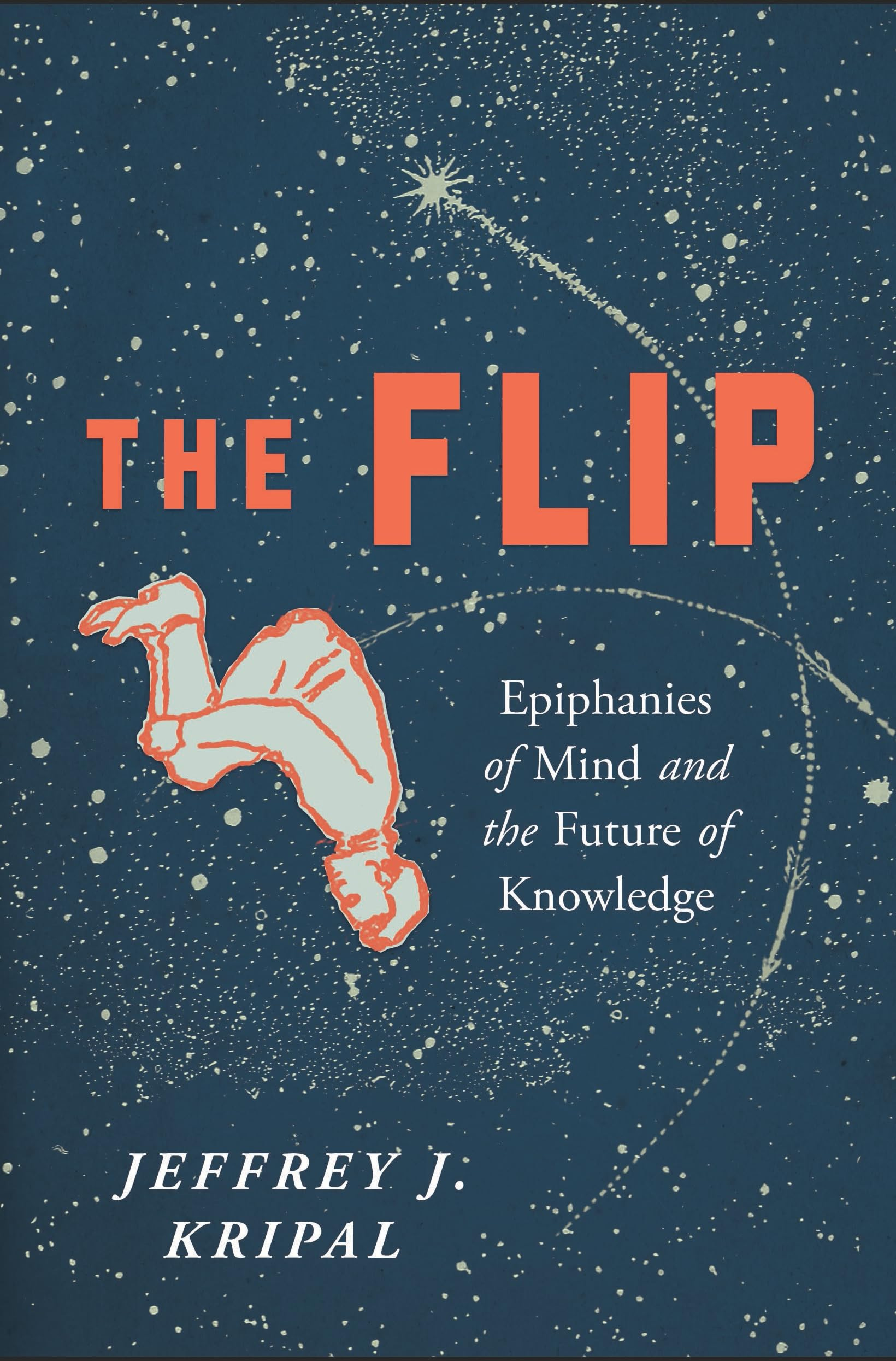
I also continue to be active with the Creative Destruction Lab’s Reading Group — the last one, about a mind-blowing book you that I urge you to read: The Flip: Epiphanies of Mind and the Future of Knowledge. Written by Jeffrey Kripal, it examines the sudden, transformative experiences—or “flips”—that cause even highly trained thinkers or scientists to abandon strict scientific materialism. I believe such a flip is necessary for science to finally understand consciousness—and, ultimately, how to engineer technology that meaningfully engages with it.
Lastly, if you’re local to Vancouver, I encourage you to check out a thriving monthly technological consciousness discussion group, called Mind, AI, and Consciousness. It’s inspiring to see ordinary people ask, “wait a minute — what is a mind?” in a world where we increasingly feel surrounded by technological minds. We go a lot!
More to come as our work progresses. Thank you for being patient with me.
* - Participation does not imply an endorsement by Jeff Bezos or Amazon
Suzanne & Mychaylo,
Would you guys be interested in exploring disease management - perhaps as a middle tier exercise on the robotics path?
Yes it’s a fascinating field Suzanne which I must admit has captured me also. I wonder with the quantum mind how would you work persistent memory? I’m trying a more computational approach, although not mapping all human cognitive processes, I mean we don’t want psychopathic robots, but more focusing on edge cases, nuance in the meaning that matters. Like teaching Ai that when presented with 2 forks in road sometimes the correct path is neither and a reweighing and creation of a third option is required. Vision is critical, they need perspective. Good luck for your new venture 💡