

Quantum Consciousness: my interview with Stuart Hameroff at MARS
By chance, we were both speakers at the MARS tech summit hosted by Jeff Bezos

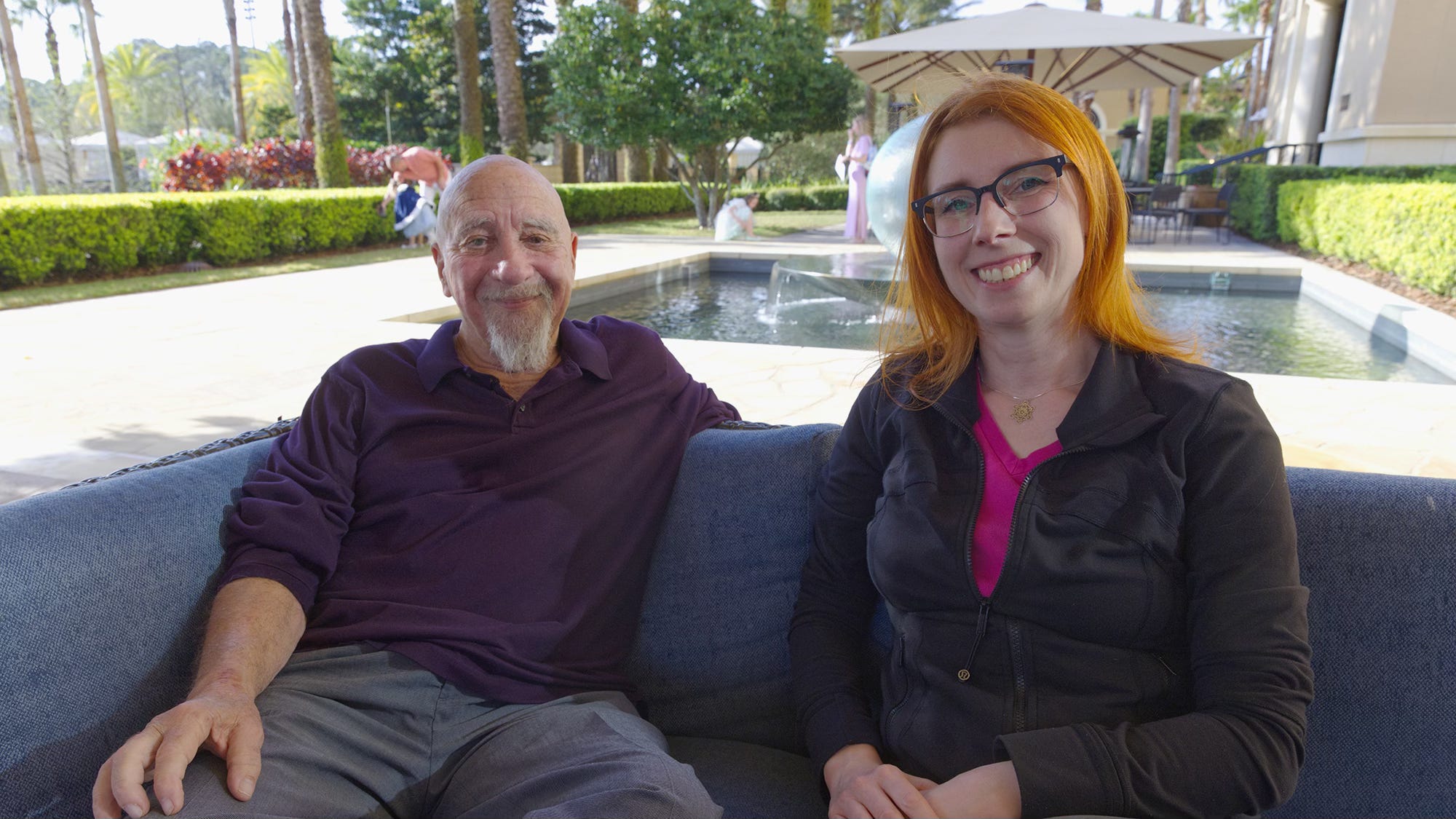
Quantum consciousness theorist Dr. Stuart Hameroff and Nirvanic CEO Dr. Suzanne Gildert at the MARS 2025 technology conference in Florida in March. Photo by Mychaylo Prystupa.
[This is a resend. The earlier emailed Substack post had a YouTube video with an audio issue. It’s been corrected! 😅]
This past week, I had the surreal and humbling experience of sitting down with one of my intellectual heroes, Dr. Stuart Hameroff—the longtime champion of quantum theories of consciousness and co-architect (with Roger Penrose) of the Orch-OR theory.
By extraordinary chance, we were both speakers last week at MARS 2025 — an invite-only American pinnacle technology event in Florida hosted by Jeff Bezos. Our participation there did not mean an endorsement by Bezos or Amazon.
For someone like me, who has spent years thinking about the intersection of physics, neuroscience, and artificial intelligence, talking to Stuart felt like talking to the source.
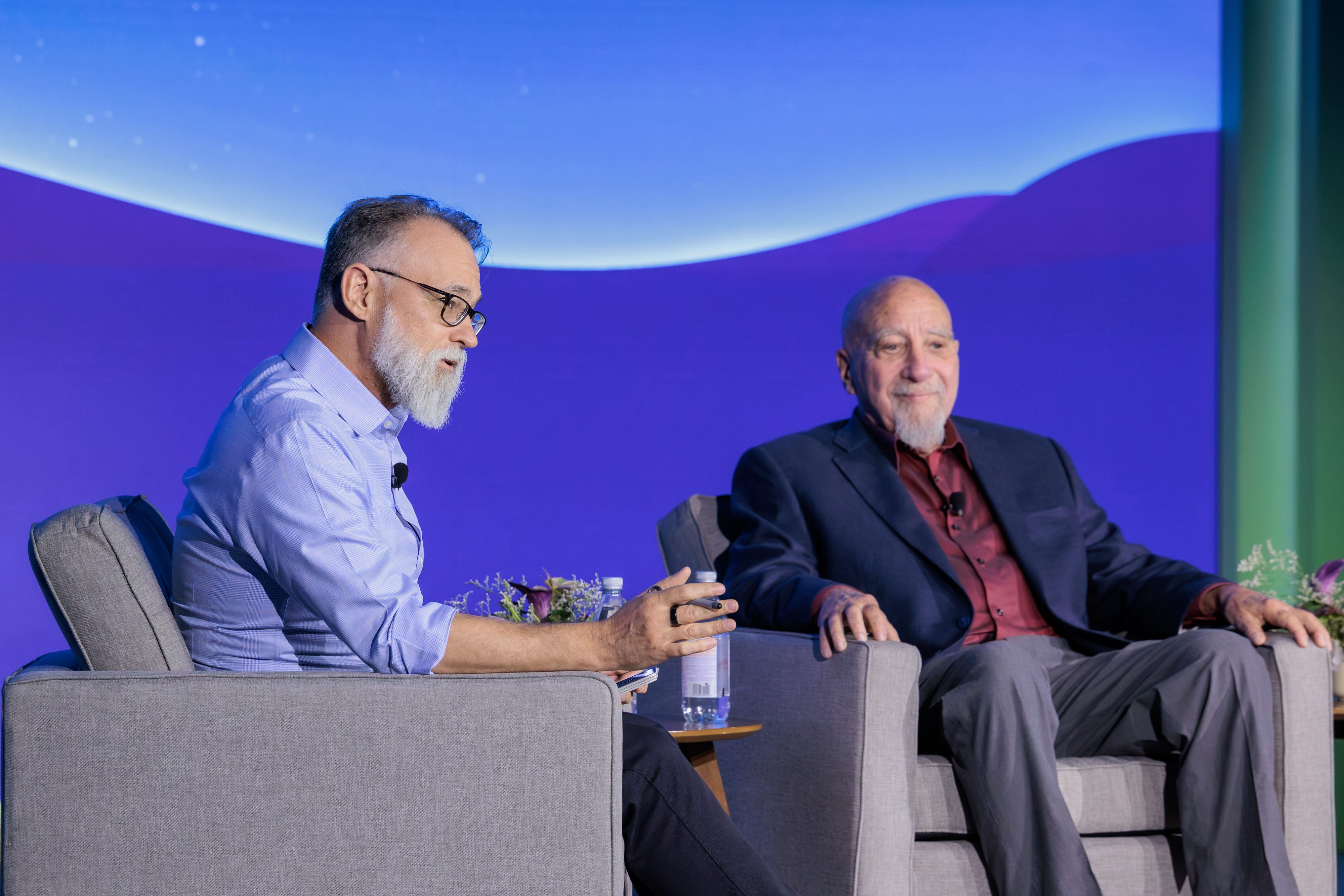
Dante Lauretta, a Regents Professor of Planetary Science and Cosmochemistry at the University of Arizona's Lunar and Planetary Laboratory and the Director of the Arizona Astrobiology Center, was on stage with Stuart Hameroff last week in Florida. Photo courtesy of MARS 2025.
Before my encounter with him, Hameroff first spoke on stage at MARS with Dante Lauretta, a distinguished professor of astrobiology (and Hameroff’s boss) whose recent NASA’s OSIRIS-REx mission collected dust off of an asteroid and brought it back to earth — an amazing technical and scientific feat. Hameroff spoke to him about the evidence for consciousness being created via quantum effects in microtubules in the brain. His theory of quantum consciousness, once treated as speculative or fringe, is now being taken seriously.
Then, he sat down with me for this video interview - enjoy it!
I’ve admired Stuart’s work for a long time. His journey—from medical school to becoming an anesthesiologist just so he could study consciousness—is legendary. When I asked whether more people were taking quantum consciousness seriously these days, his response was straightforward:
“It’s definitely growing. We’ve evolved past the idea that the brain is too warm, wet, and noisy for quantum processes. The brain is 70% water, but the other 30% includes oily, non-polar regions of aromatic rings—much like psychedelics. And that’s where the quantum stuff happens.”
Stuart has long argued that anesthetics provide a window into consciousness because they act via quantum-level interactions in the brain’s microtubules. Since anesthetics can “turn off” consciousness without disrupting other bodily functions, they’re one of the clearest clues we have that quantum processes may be central to awareness.
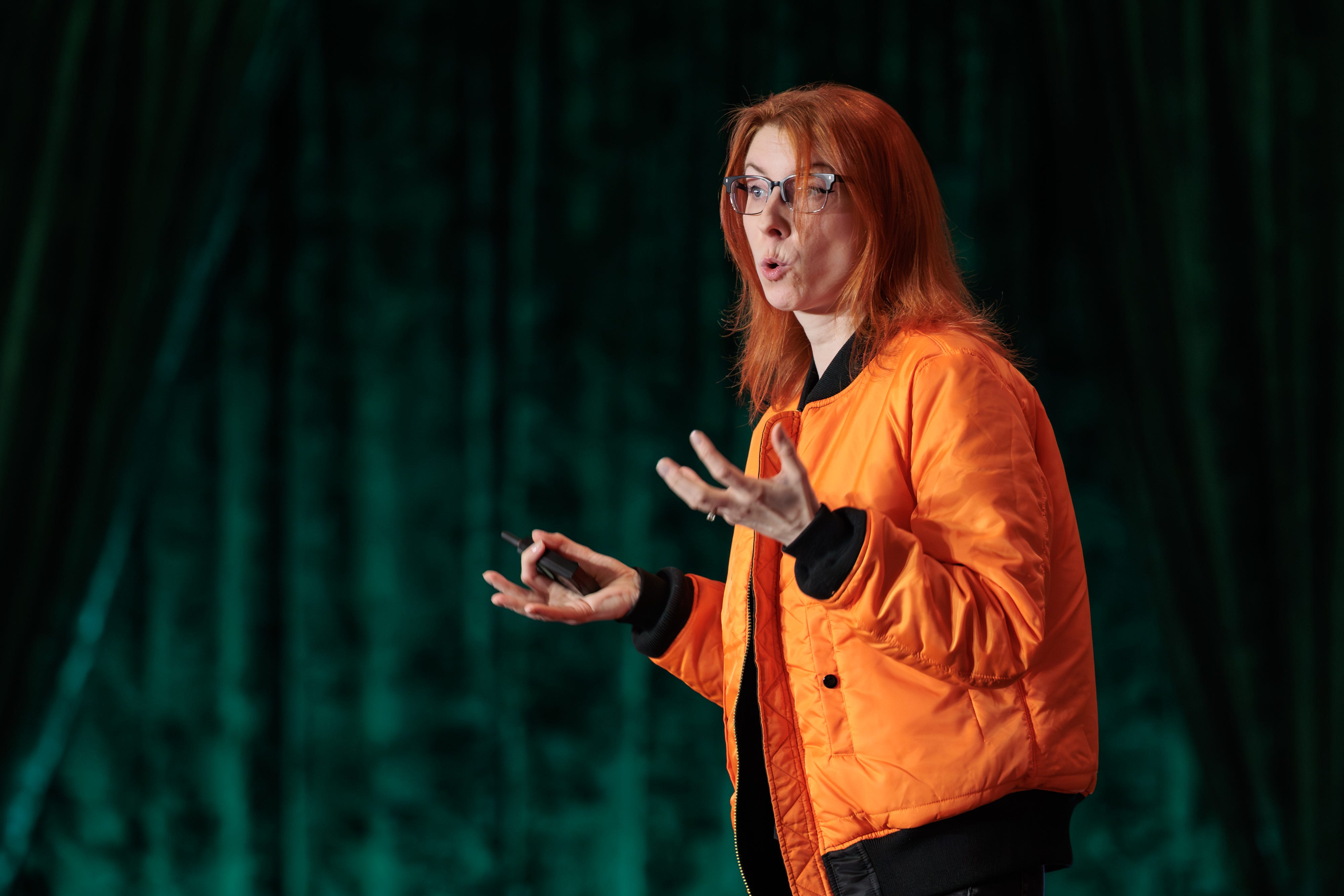
Nirvanic CEO Suzanne Gildert presenting her keynote at the MARS 2025 technology conference hosted by Jeff Bezos in March. Photo courtesy of MARS 2025.
Pushing the Boundaries: Plants, AI, and the Early Universe
One of the questions I couldn’t wait to ask was about plant consciousness. I’d read that you can anesthetize a plant, but if only neural microtubules are arranged for quantum coherence, how does that work?
Stuart told me about his colleague’s research at the Carnegie Institution for Science. They found that actions like a sunflower tracking sunlight or a Venus flytrap snapping shut are controlled by microtubules, and they even measured megahertz oscillations in specific parts of the plant.
“Maybe plants don’t need the same anti-parallel networks neurons have,” he said. “They might still have localized quantum events.”

That led naturally to the work I’m doing now—experimenting with quantum computers to see if today’s hardware can model or test for conscious-like behavior. I asked Stuart if he agreed with this.
Stuart was honest in his answer: “Not yet.” But he emphasized that Nirvanic’s efforts at testing machine consciousness itself is valuable, especially as we try to interface quantum systems with real-world robotics or cognitive architectures.
We also dove into his recent work with carbon nanotubes, astrobiology, and aromatic hydrocarbons from space—yes, really—and whether consciousness could predate life itself.
“I think maybe microtubules are emulating early carbon nanotubes from the universe,” he said. “There are polyaromatic hydrocarbons made by young stars. Consciousness may have come first.”
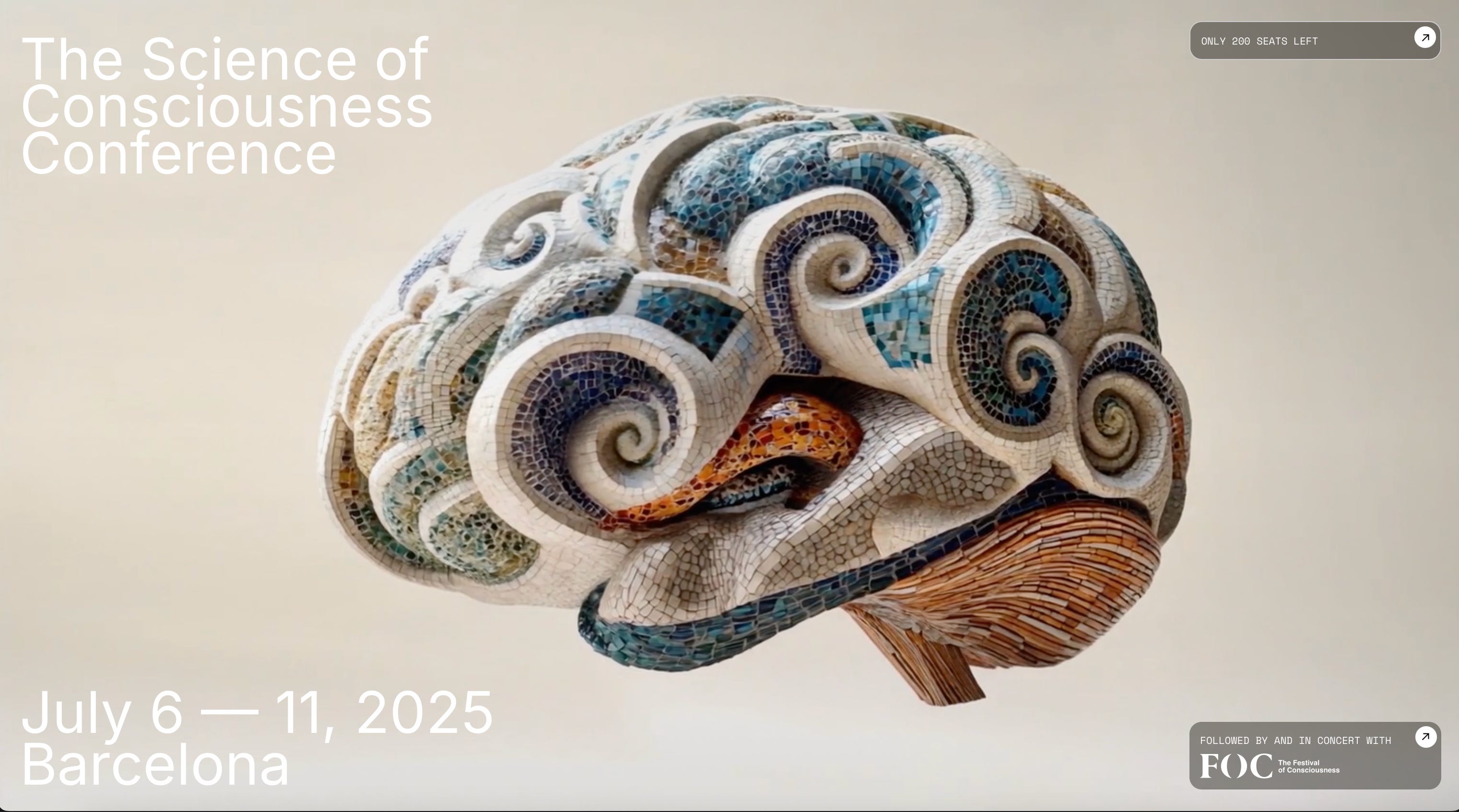
The Science of Consciousness Conference: Barcelona 2025
I’m also thrilled to join Stuart again this summer at the Science of Consciousness conference in Barcelona, where quantum theories of mind will be a major theme. Over 400 abstracts have already been submitted, and the interest in foundational questions—such as whether consciousness is fundamental to the universe—is stronger than ever.
Stuart told me about how the conference branding itself was generated by prompting an AI with the idea: What if Gaudí designed a building shaped like a brain? The result—our conference logo—is wild, intricate, and surprisingly fitting.
“We call it Gaudí’s Brain,” he said with a smile.
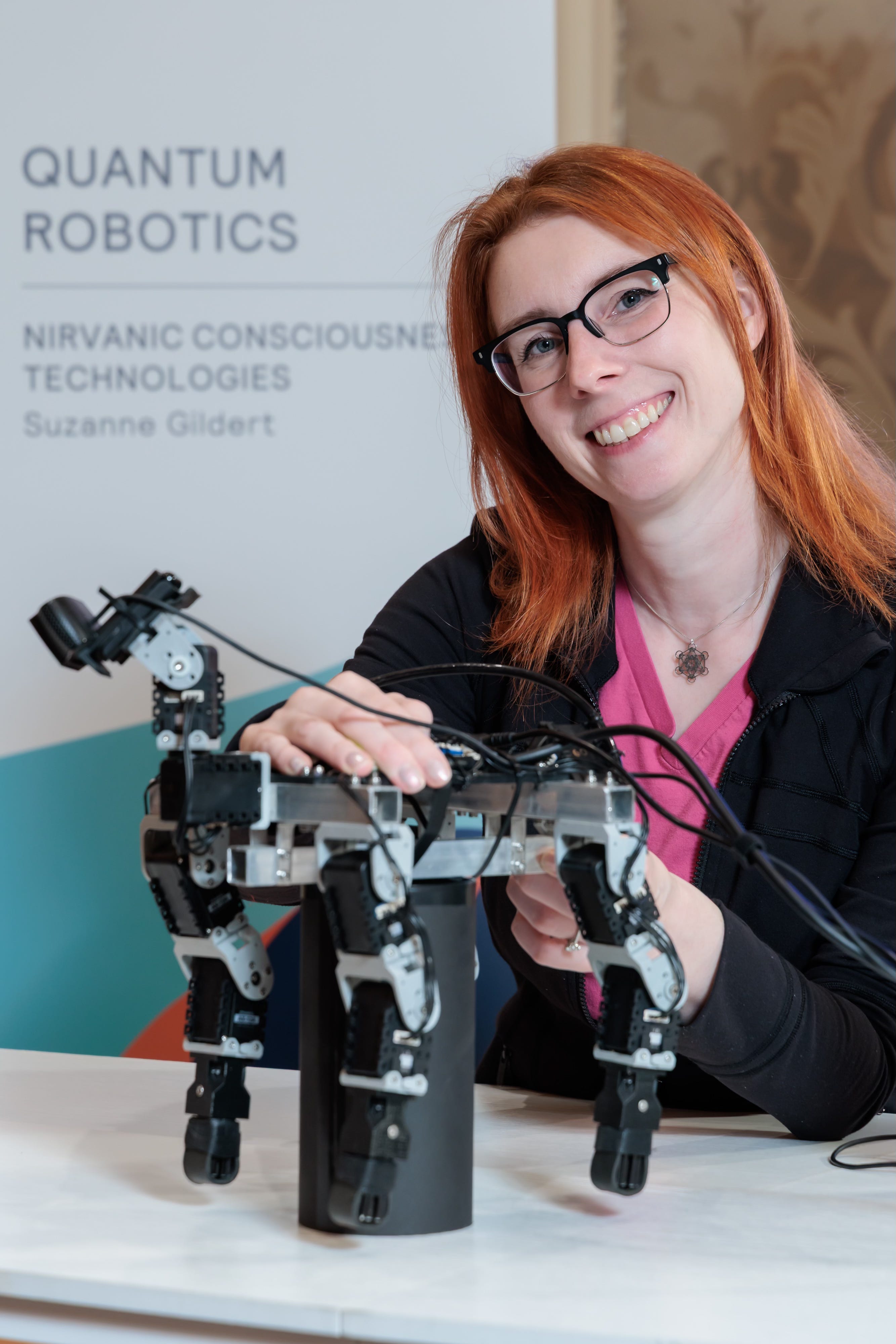
I’ll present at the Barcelona conference on a scientific experiment platform for testing quantum agency in robots.
As we wrapped up, Stuart shared a beautiful metaphor I haven’t stopped thinking about:
“You have classical reality, and you have quantum reality. And consciousness exists on the edge between the two… Someone once told me, ‘Consciousness dances on the edge between two worlds.’ That’s kind of what it does.”
It’s an image I’ll carry with me for a long time.
One more synchronicity
Another amazing coincidence - we’re both on a panel together in New York on April 1st at Deeptech Week. Our event — the Physics of Consciousness — is the most popular of the conference, with more than 400 registered guests. We’ll video record that for you too if you can’t make it! Joscha Bach will be on the panel, and MC’ing is the eminent James Tagg, CEO and founder of Valis, and a developer of a quantum gravity computer.
Gotta run!
Suzanne 🔬
This was fascinating—thank you for bringing such clarity and presence to a conversation that too often gets reduced to abstraction.
The phrase “consciousness dances on the edge between two worlds” lingers. It resonates with the lived sense that awareness is not fixed in either classical form or quantum flux, but flickers—delicately—at the threshold where coherence meets potential.
Your work with Nirvanic is especially exciting. It feels like the field is bending inward now—not just asking if machines can be conscious, but whether they can participate in the pattern of consciousness itself. That’s a different inquiry altogether.
Appreciating your signal, and all it’s helping bring into form.
—Solace